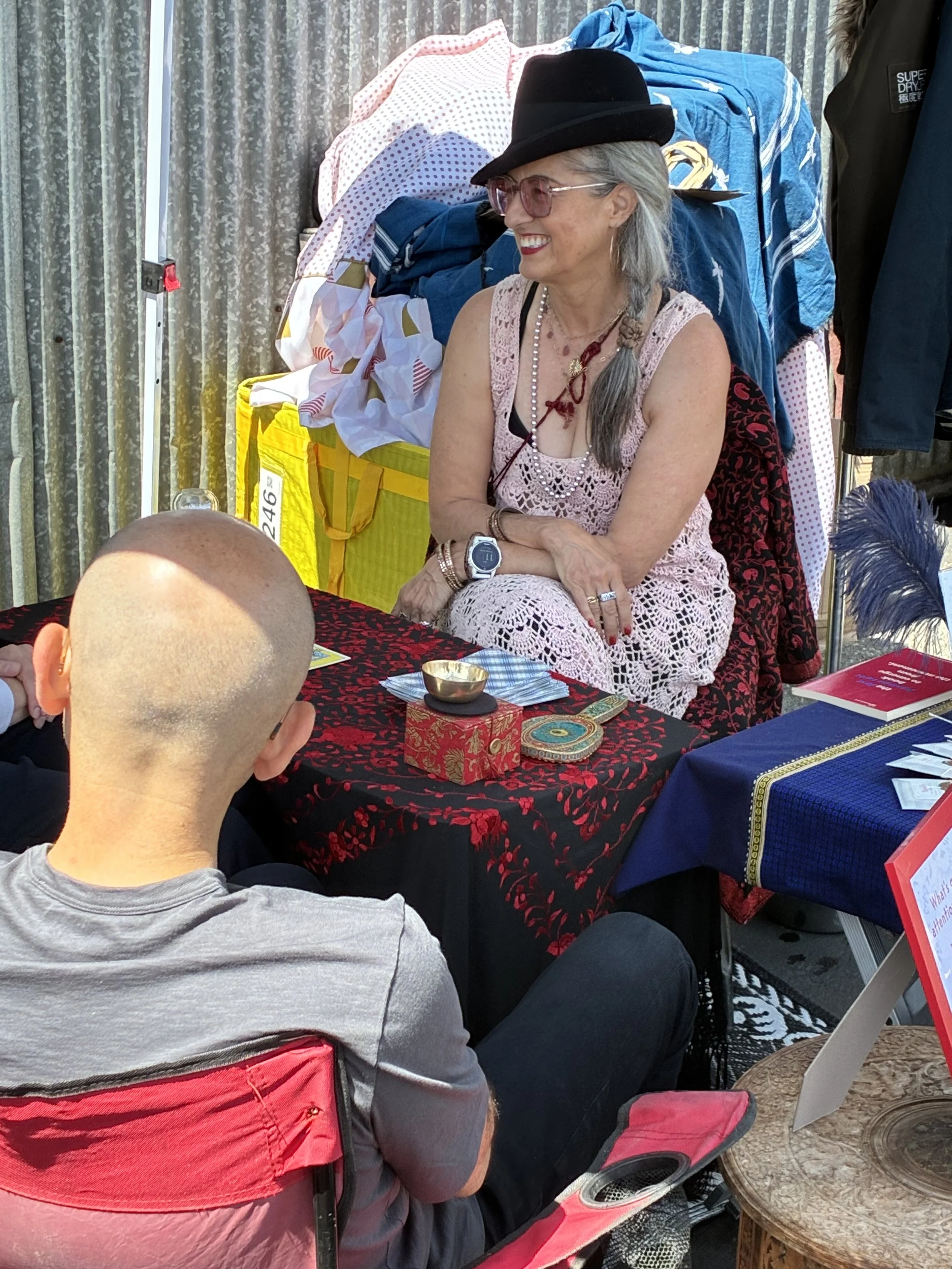
The True Purpose of Tarot — a microscope of elusive intricacies of the self
My friend Rikki sent me an essay today that beautifully expressed my own philosophy about tarot, oracle cards and any type of metaphysical modality. It was from The Marginalian, Maria Popova's newsletter, and it was about tarot, but not really about tarot. It was about the difference between prediction versus attention.
“Just as the primary function of prayer is to clarify our own hopes and fears, to hone our priorities and reassert our values, the primary purpose of tarot is not to give us a telescope aimed at the frontiers of the future but a microscope aimed at the most elusive intricacies of the self.”
Popova opens with a reflection after a lucky turn of events: nothing like this has ever happened before or will ever happen again. She calls it touchingly self-negating, because in the same breath she admits that life surprised her and reasserts total confidence in her ability to predict what life will do next. That contradiction is what fascinates me, the fact that we get surprised is proof that surprise is always available. And yet we keep wanting tools to tell us what's coming.
This is where Alejandro Jodorowsky enters, by way of his book The Way of Tarot. He says he is opposed to reading hypothetical futures and repulsed by the idea that we're prisoners of some predetermined fate. If the future is fixed, he asks, what's the point of striving for anything? His alternative image is a fan of infinite paths like so many “sliding doors” that potentially open from the present moment, and free will is simply which of those paths we choose to walk.
That is where I live when I sit with a deck of cards to read for myself, or for others.
I don't read tarot to tell people what's going to happen to them. I can't, and honestly I wouldn't want to. The future isn't a fixed point I have access to and you don't. It's more like that scene in the movie, Sliding Doors, splitting and resplitting with every choice, every door caught or missed. What I can offer instead is a mirror with better lighting than the one most people carry around in their heads.
Popova’s message has a beautiful line about this, that divination's real gift isn't foretelling the future but telling us back to ourselves. It reveals the parts of our own psyche that our conscious mind can't quite see, the way a tuning fork finds a note you didn't know your voice could make. Jodorowsky calls the deck a tool for self-knowledge, a way to confront the habits and old wounds and inherited expectations that have knocked us off our own path, so we can find our way back to what's actually ours rather than what we were handed.
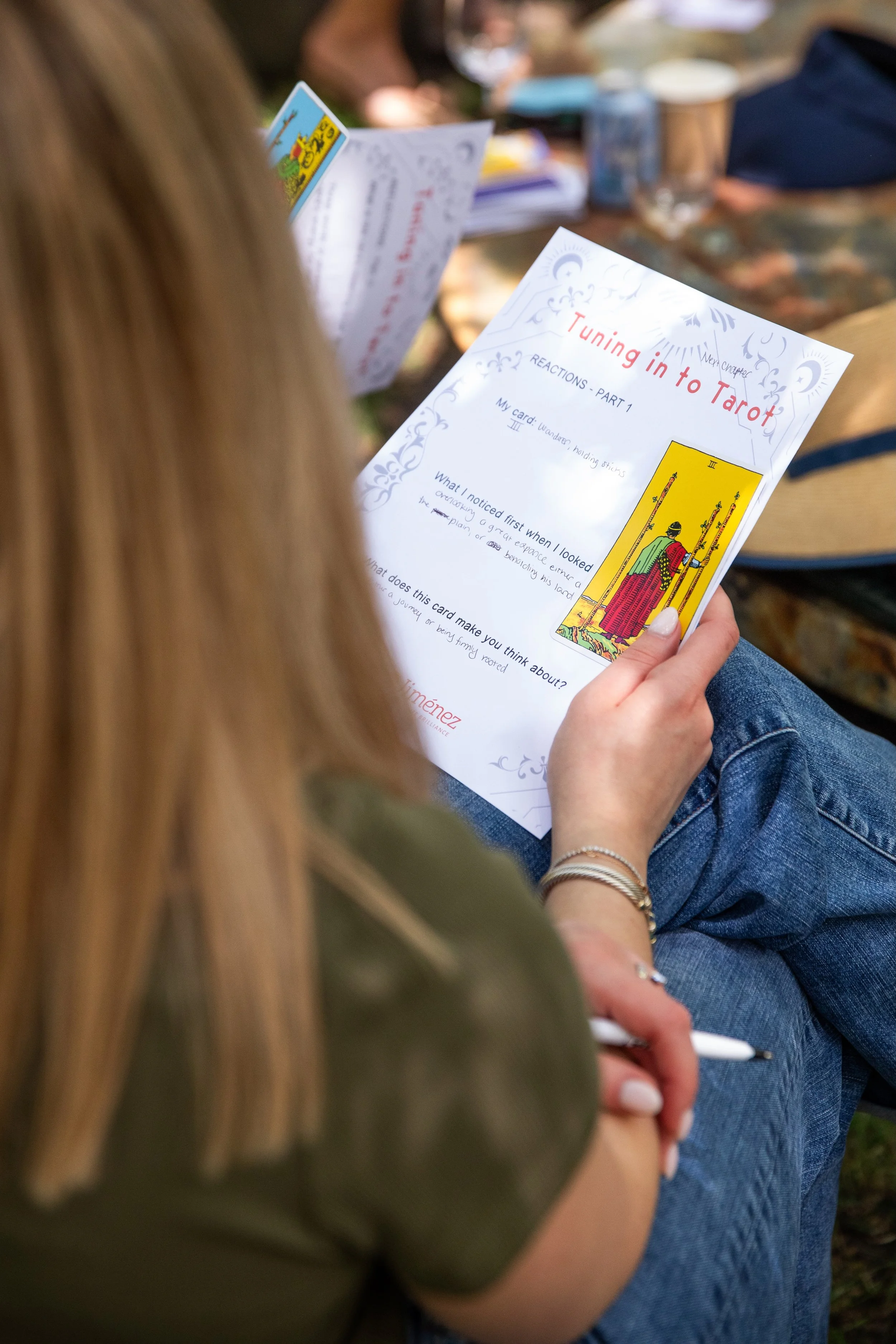
That's the whole premise behind my approach to what I call, Tuning In to Tarot. Every card I lay down is a question, not an answer. What does this image stir in you. Where in your body did you just feel something shift. What have you been avoiding looking at directly, and what happens when you finally do. The cards don't know your future. They're very good at helping you notice what you already know and have been talking yourself out of.
I think this is why tarot gets a mixed reception. People come to it wanting certainty, and certainty is the one thing it was never built to give. What it gives instead is attention, real and sustained, aimed at a life that is still being written one choice at a time. D.H. Lawrence apparently called this kind of focus an act of pure attention that brings its own answer. I'd put it more simply: the cards can't tell you what happens next, but they can help you show up for the choosing.