The Work Is the Reward (Even When It Doesn't Feel Like It)
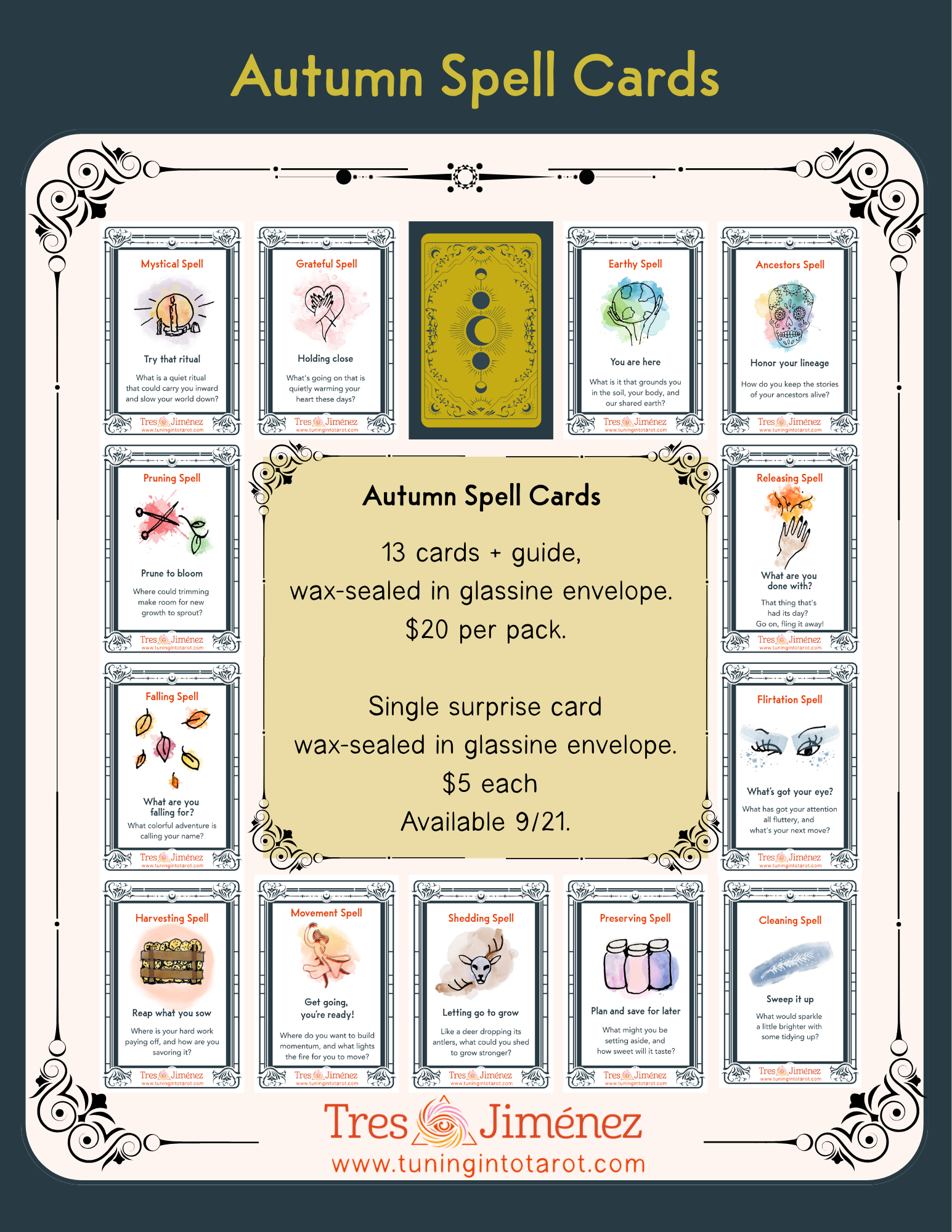
I got my fall spell cards back from the printer
this week.
I held them in my hands and felt something I can only describe as quiet joy. Not the loud kind. The kind that sits in my heart and doesn't need an audience.
Nobody’s bought one yet. Very few people have even seen them. And it doesn't matter, because the act of making them — choosing the words, the colors, the intention behind each one — that was already complete. That was already real.
Rick Rubin writes in The Creative Act that "the work is a reflection of the artist's inner world" and that the making itself is the point, separate from reception, separate from reward. Julia Cameron has been saying a version of this since 1992 in The Artist's Way: that creativity is a spiritual practice, that showing up to make something is an act of faith, and that waiting until conditions are perfect or profitable before you begin is the surest way to never begin at all.
I believe both of them. And I also know how hard it is to live by that belief on a Tuesday when nothing is selling and nobody is signing up and the thing you poured yourself into is sitting quietly in a corner waiting to be discovered.
Discouragement is real. The gap between the vision and the visible payoff is real. And the voice that says "maybe this isn't working, maybe this isn't worth it, maybe you should do something more practical" — that voice is very persuasive and shows up right on schedule every single time.
This is what I practice saying back to it: the value was never only in the outcome.
I run a free monthly Enneagram workshop. Free. Monthly. It doesn't generate revenue in any direct or obvious way. What it generates is connection, curiosity, and a room full of people who are genuinely interested in understanding themselves and each other better. Is that nothing? It is absolutely not nothing. It is exactly the kind of thing that makes a life feel worth living, and it is exactly the kind of thing that disappears the moment I start measuring it only by what it returns.
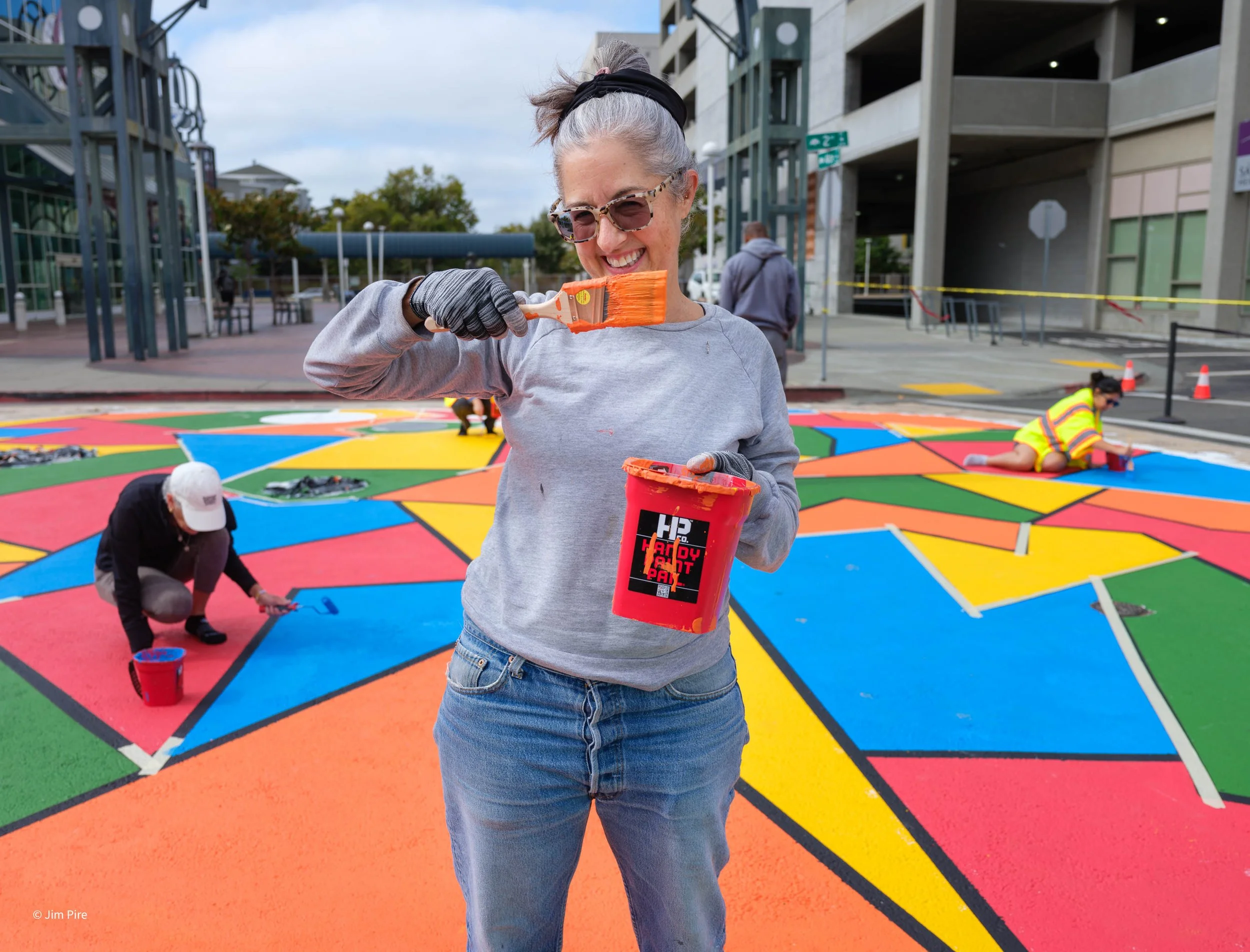
My friend Tessa makes the most amazing costumes, murals, paintings, and hand-lettered artistic letters that she actually mails to me. She is in a constant state of making beautiful things, and her creative energy is one of the most generous forces I know. She's the one who introduced me to my current favorite fountain pen ink — a dark blue-green-black with gold flecks that makes writing feel like an event worth showing up for. A small thing. A wildly joyful thing. The kind of thing that reminds you that humans are capable of making original, irreplaceable, utterly unnecessary beauty, and that this capacity is not a luxury.
Creativity, I argue, is our responsibility.
We are living in a moment when technology can generate content, simulate creativity, and produce something that looks like art at a pace no human can match. And what that moment is asking of us — urgently, I think — is to remember what technology cannot do. It cannot make your spell cards. It cannot write a letter in your particular handwriting with your particular ink on paper you chose because it felt right. It cannot show up to your free Enneagram session with the specific combination of curiosity and care that you carry into that room. It cannot be you.
That specificity, that irreducible humanness, is worth protecting. Worth practicing. Worth showing up for even when there is no immediate payoff, no audience, no validation waiting on the other side.
So if you have a half-finished thing sitting in a drawer — a painting, a project, a practice, a series of sessions you keep meaning to launch — I want to offer you this: the discouragement you feel is not a signal that the thing isn't worth doing. It's a signal that you care about it. And caring about something you made, even before the world has weighed in on its value, is one of the most quietly courageous acts available to us.
Make the thing. Hold it when it comes back from the printer. Feel that quiet joy.
Creativity is real. And so are you.