Who Said Your Past Gets the Final Vote?
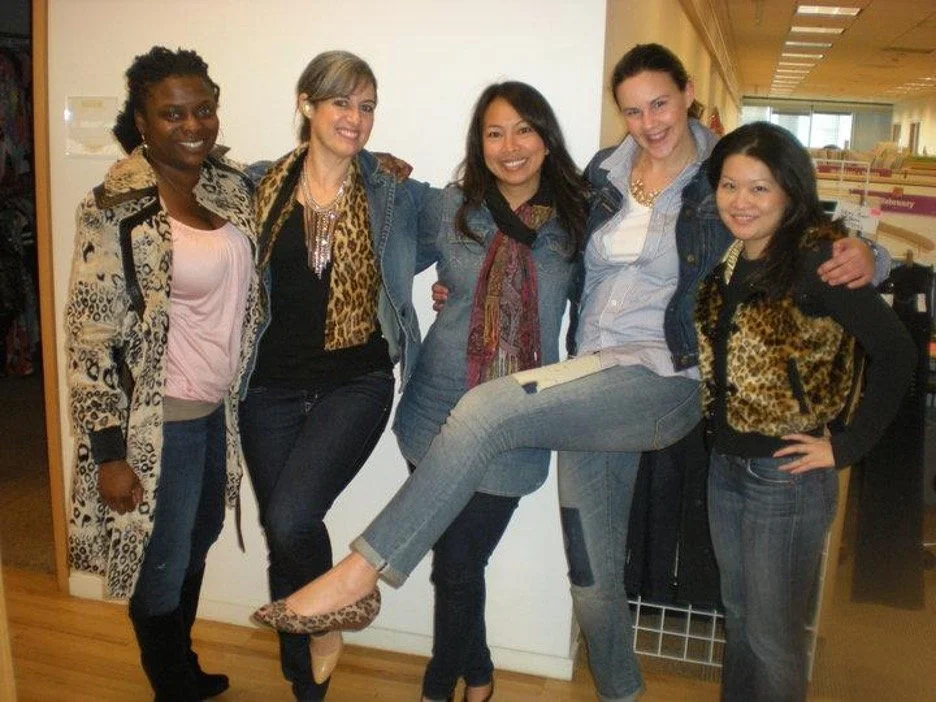
My product development team dressing in a matching animal theme during my fashion industry days.
I sat in more product review meetings than I can count. Every season, the same ritual. Pull up last year’s bestsellers. Study what sold, what didn’t, what the customer supposedly wanted based on twelve months of data that was already old by the time we were looking at it.
We had a name for what happened when a team leaned on that past-data too hard. We called it having “last-year-itis”. The condition where you build the next collection almost entirely out of what already worked, because it’s safer to defend a decision backed by numbers than to defend a hunch. The trouble is, customers move and so do the trends. The thing that sold last spring tells you almost nothing reliable about what anyone will want next spring. We knew this. We built the whole line around it anyway, half the time, because last year’s data was the only thing in the room everyone could agree to trust.
The best product development teams I worked with had a phrase for the alternative. Data-informed, not data-driven. It sounds like a small distinction, but it’s the whole game. Data-driven lets the numbers make the decision for you. Data-informed means you let the numbers sit at the table, but they don’t get the final vote. You still have to bring judgment, instinct, and a point of view about what hasn’t been tried yet. Words matter here, because the word driven quietly hands over the wheel.
I think most people are running the data-driven version of that on themselves.
I hear it constantly in coaching conversations. Someone describes who they are by pointing at what already happened. The year they got passed over for an opportunity. The relationship that ended badly. The version of themselves that flinched in a hard meeting three years ago. All real data. None of it particularly predictive of what they’re capable of building next. And yet it gets treated like the most reliable evidence in the room, the same way a bestseller list gets treated like settled fact, because it’s easier to defend a decision backed by the past than to trust something that hasn’t been proven yet.
This is where product development stops being a story about clothes and starts being a story about how anyone builds anything new, a strategy, an idea, a version of their own life. The principle doesn’t stay in the product world. It just gets more interesting once it leaves it.
A lot of growth and change work runs on a data-driven model. The first question is always some version of what’s wrong with you, based on what happened to you, whether or not any of it was your fault or within your control. That’s a fine question. It’s just not a forward-moving one. It’s the data-driven question, the last-year-itis question. It keeps you defending a version of yourself instead of designing the next one.
Design thinking asks something different. What are we building next and why, using what happened as information rather than as a verdict.
There’s a second layer to this I only noticed once I started paying attention to direction, not just data. Looking backwards tends to orient people away from something. Away from the pattern, away from the pain, away from whatever isn’t working. Design thinking orients toward something. Toward the next version, the next prototype, the next thing worth building. Moving away from a problem and moving toward a vision use completely different muscles. Moving away keeps the problem at the center of the picture, even when you’re trying to escape it. Moving toward puts something else at the center, something you actually want, and the problem just quietly loses its grip on the wheel.
I noticed the same split in how teams approached creating goals for the future. Some teams spent the whole planning meeting fixing what went wrong. Others spent it picturing what the next quarter or year could look like at its best, and let the fixes fall out of that picture almost as an afterthought. The second kind of meeting always produced better outcomes. Positive visioning isn’t naive. It’s just a more efficient way to solve problems, because you’re building toward something specific instead of only clearing away what you don’t want.
I remember the first time I said this out loud to a room of executives who’d spent the morning picking apart everything that went wrong with their team over the past year. I asked them to stop over-analyzing what failed and start sketching what’s next, moving toward what they wanted instead of away from what had gone wrong, using the past as information instead of a verdict. You could feel the room shift. Not because the past stopped mattering. Because they finally had permission to stop being sentenced by it.
I don’t think people who feel stuck are broken. I think they’re mid-prototype, and somebody forgot to tell them that’s allowed. Nobody in a product meeting expects the first sketch to be the shipped product. Nobody should expect that of themselves either.
The past is useful right up until the moment you let it drive instead of inform. After that, you’re just building the same collection again and wondering why nothing new ever sells.