Consciousness in Boredom
I went to listen to Michael Pollan and Christof Koch at Zellerbach last night. Jack came, and so did my running buddies. These are the people I feel connected to at a level I that feels mycelium level deep, the kind of connection that runs underground and holds everything together. I was already primed for a night about consciousness before anyone said a word from the stage.
The talk was a journey into consciousness, tied to Pollan's new book, A World Appears. What I liked is that they refused to land on a tidy answer. The night opened with the oldest question there is, what consciousness actually is, and then kept circling it rather than pretending to solve it. Koch has spent his career on exactly this. He and Francis Crick spent years hunting for where consciousness lives in the brain, the specific set of neurons behind subjective experience. Koch once bet that the physical basis would be found within twenty-five years. He lost, and paid the philosopher David Chalmers a case of wine. I loved that. A scientist of his stature in front of a full house saying, in effect, we looked hard and it is not easy to find.
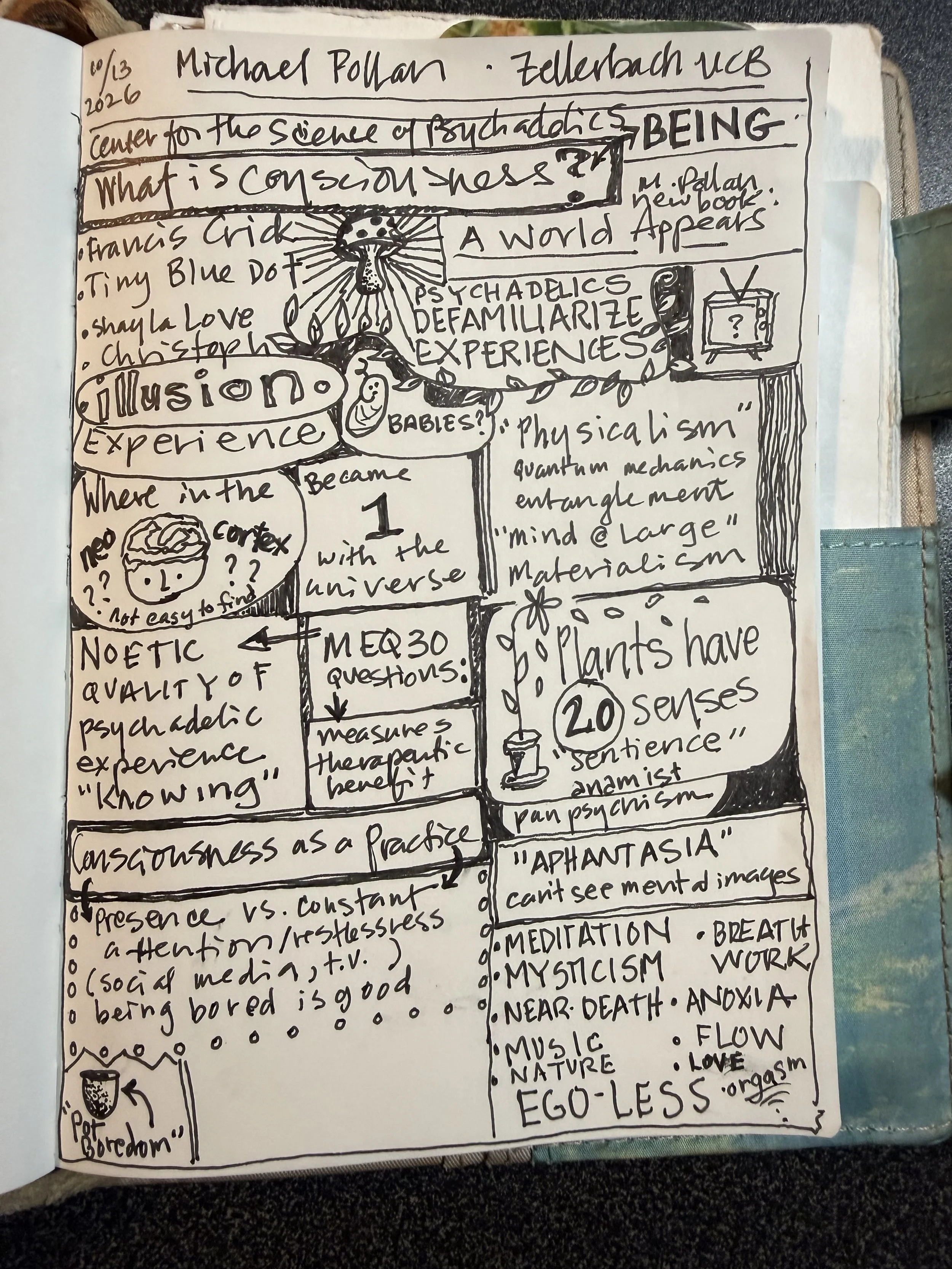
That admission set the tone. If you search the brain’s neocortex for the seat of the self and come up empty, you are left with the stranger possibility that consciousness is not a detectable object sitting in one place. Pollan traced it through science, philosophy, spirituality, and psychedelics, and Koch has drifted over the years from plain materialism toward panpsychism, the idea that some flicker of experience might run through all of matter. They talked about plants having their own forms of sensing, about sentience turning up where we assumed there was none, about the circle of what counts as conscious being far wider than we were taught. Consciousness is the center of my own deep work, so hearing a neuroscientist argue for a wider circle of awareness felt like hearing someone describe a place I already visit.
The part that I took away was consciousness as a practice rather than a goal. Not something you have and forget about, but something you tend and grow. They kept returning to presence, and to its enemy, the constant restlessness of our time that constant scrolling on social media and television are built to feed. This is where Koch's concept of hot boredom came in, and I keep turning it over. He did not mean the flat, lazy boredom of a slow afternoon. He meant the agitated kind, the tiger pacing its cage, jumpy and twitchy and desperate to do something, anything. That is the boredom that makes us reach for the phone and fill the space with easy distractions. His point, as I heard it, was that if you can instead try sitting inside that heat without scratching the itch, letting it cool, and on the other side is the quiet where your own mind finally has room. Being bored, the genuinely uncomfortable kind, is good for us. We have engineered it out of our lives, and we lost something in the trade.
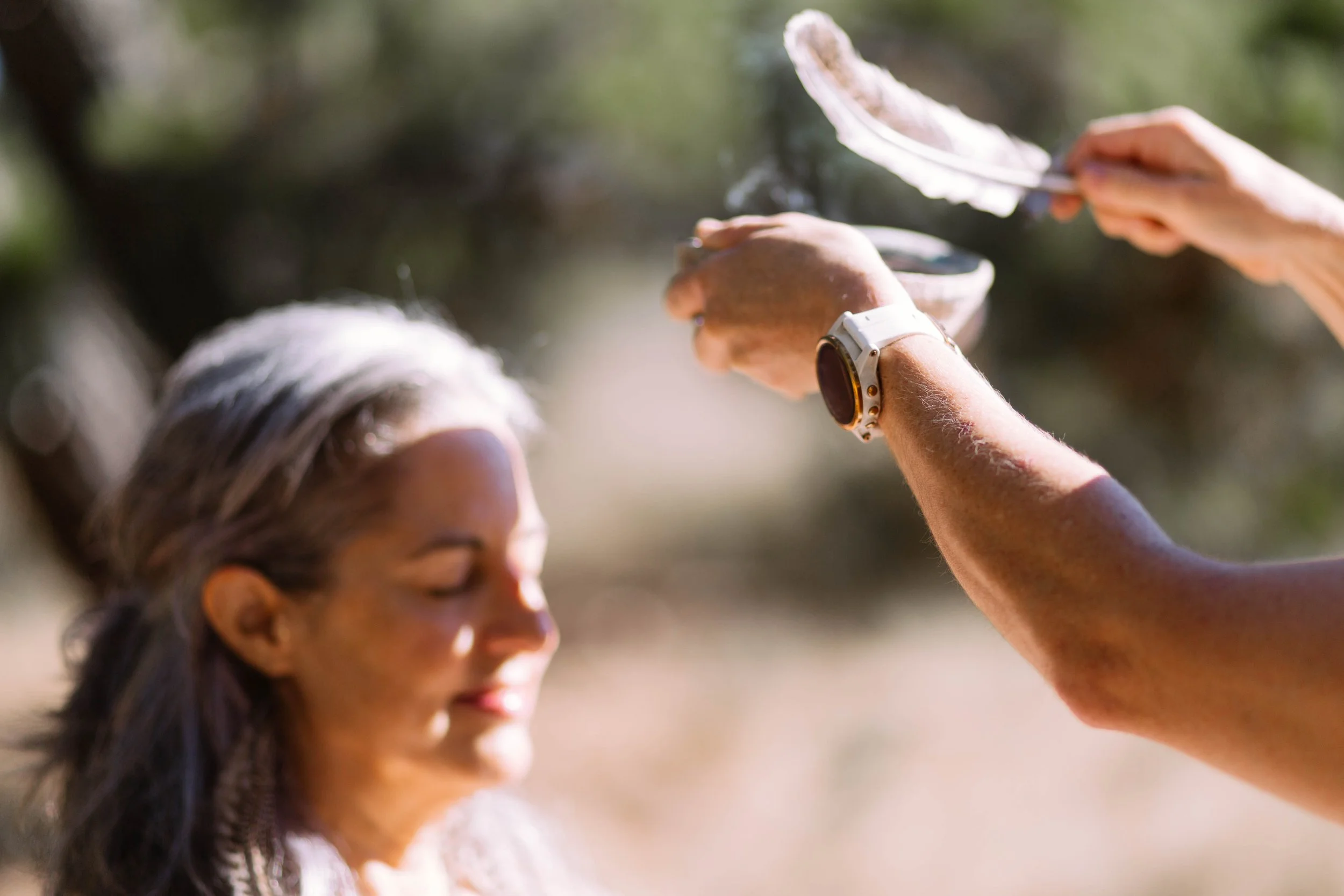
There was a whole constellation of ways people reach ego-less states, and seeing them side by side was its own small revelation. Meditation, breath work, near-death experience, music, nature, flow, love. Different doors into the same room, the one where the boundary of the separate self goes soft. I know that room. I have been there with psilocybin among friends at Burning Man, and what I remember most is not anything cosmic or solemn. It was pure joy and playfulness. We were like bratty, loud, and playful children, delighted with each other and with everything around us. That was a connecting experience in the fullest sense, the self loosening its grip just enough to let everyone else all the way in.
But last night was not about shrooms, and neither is my own deepest work. The psychedelic experience is one door, and a good one, but it is not the only one, and for me it is not the main one. My practice is the daily, unglamorous version. Presence. Attentionm Choosing to stay in the discomfort of an unfilled moment instead of filling it. Noticing the tiger and not feeding it. The egolessness I care about most is not the kind that arrives in a few extraordinary hours. It is the kind I felt sitting in that hall, aware of Jack beside me and my close friends around me, the ordinary astonishing fact that these separate minds can feel like one organism.
Maybe that is what the whole evening was pointing at. We spend enormous effort building up the self, the confidence and the esteem, and then we spend just as much effort trying to get free of it, through meditation and psychedelics and art and awe. Pollan put that paradox at the center and left it open. I am happy to leave it open too. I do not need to know exactly what consciousness is to know that it feels most alive to me in connection, in the company of the people who are mycelium deep.