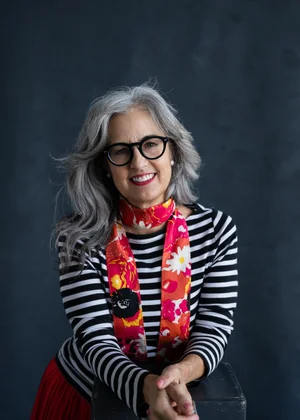
Hello, my friend
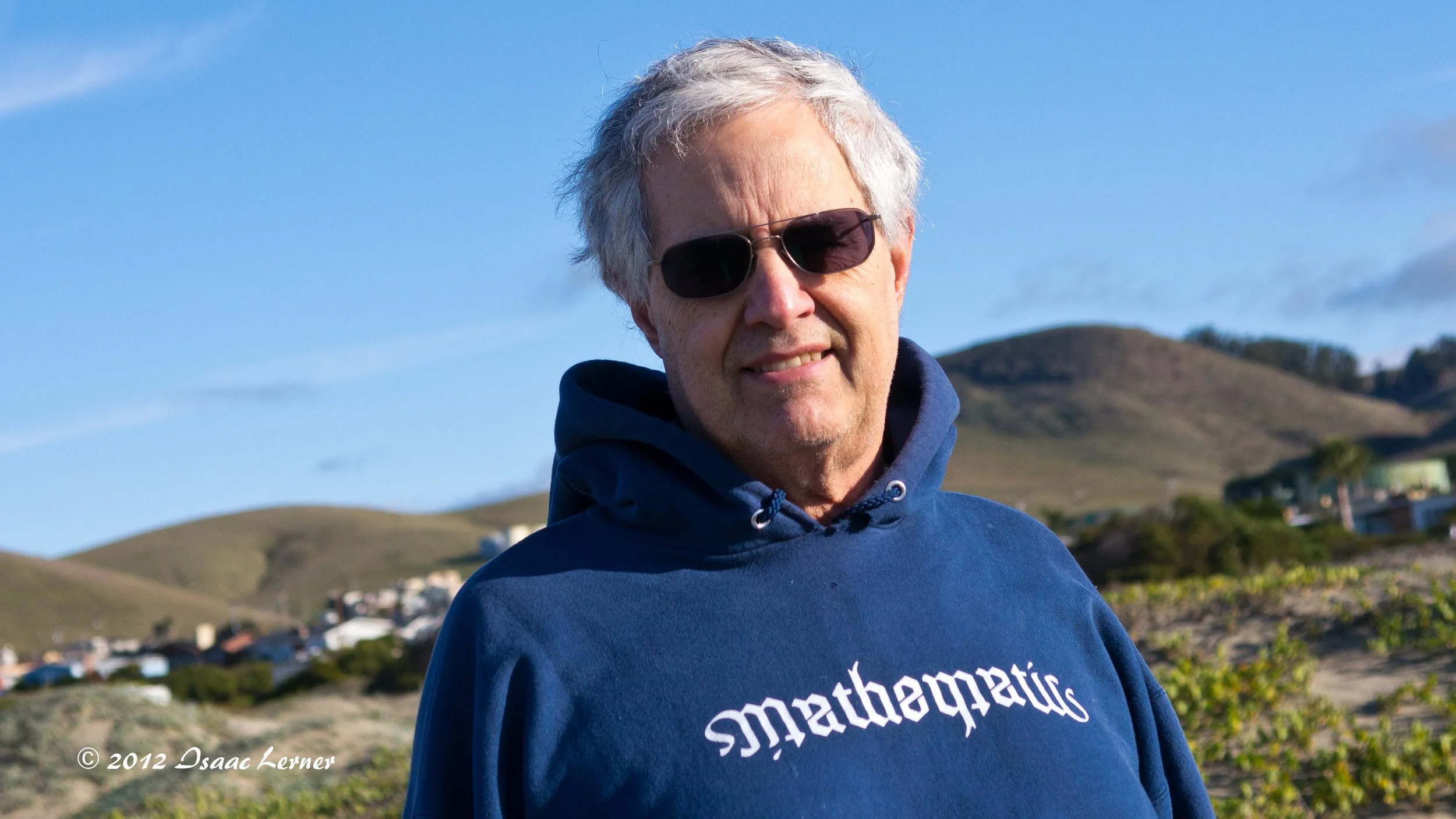
My dad said hello to everyone. Walking, jogging, waiting in line, he greeted whomever he passed. Sometimes he called out "Hello, my friend!" to someone who was clearly not his friend and had no plans to become one. I laughed. I rolled my eyes. Now that he's gone, I miss that habit along with just about everything else about him.
So I'm picking it up. I'm an extrovert, and still my world shrank during the pandemic and the years of working from home. My circle got small and cozy, and the muscle for easy connection with everyone else got weak. I know I'm not the only one: i. In 2023, the U.S. Surgeon General called loneliness and isolation an "epidemic" and a major public health concern, one that had been growing for years, even before the pandemic.
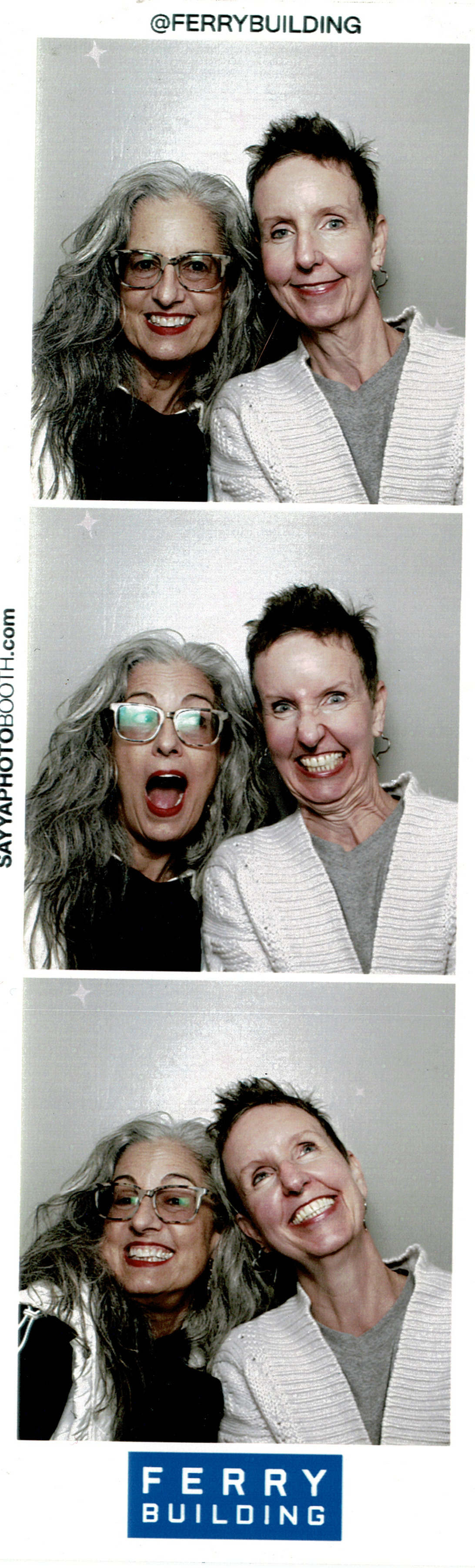
This past weekend reminded me what that muscle feels like at full strength.
My dear friend Rikki came to visit, and when the two of us get together, our extrovert energy goes exponential. We made new friends everywhere we went. Ron at the cafe told us his favorite dad jokes, and I think my dad would have approved of Ron.
At the SF Ferry Plaza, we ate lunch with Deborah, one of the Black Cowboys of Oakland, and had an amazing conversation about modern-day culture, connection, and seeing the god-ness in each other. The Fleet Week planes roared overhead the whole time, though the fog was too thick to see them. We reconnected with old friends at a cozy little music venue in Berkeley and also at a fabulous anniversary party filled with people from our Burning Man community. Each hello opened the door to another one, and our chemistry-combo magnified all of it.
We felt the power of connection everywhere we went, and I'm still carrying that feeling.
The science backs it up. Psychologists Nicholas Epley and Juliana Schroeder asked Chicago commuters to talk with a stranger on their ride. Many predicted it would make the commute worse, yet they reported a more positive experience when they connected than when they didn't. The reason we hold back? People wanted to talk, but assumed the stranger didn't. So we all sit in silence, each of us sure we're the only one who'd welcome a hello. Another study found that people who smiled, made eye contact, and chatted with a barista felt more positive than people who kept it efficient. Ron would not be surprised.
My sister Susie and I recently talked about how differently the world handles all this, and I love the variety. Here in the U.S., our habit of smiling at strangers may come from history. Countries built on centuries of migration from many places tend to be more emotionally expressive, and when neighbors lacked a common language or shared norms, open expressions helped people understand each other. Susie experienced a big variety in eye-contact and saying hello while hiking on various trails across different countries in Europe. Depending on the culture, a smile can read differently. In some areas of the world, a smiling person may be judged as less intelligent, and where corruption runs high, people trust smiling strangers less. In one study, Japanese participants rated a face making direct eye contact as angrier and less approachable than Finnish participants did. In those places, looking away is the courteous choice. And in isiZulu, greeting is an important procedure, and the person who arrives is supposed to greet those present first. The greeting Sawubona is often translated as "I see you," and the reply, Ngikhona, means "I am here." I can't think of a better description of what a hello does.
Now, when I walk around Oakland where I live, and in San Francisco where I often work, I offer a friendly hello. More often than not, people say hello back and smile. For an instant we see each other as humans, and that small exchange strengthens our connection to the collective. Some people don't answer, and that's fine. They may be having a hard day, or a quiet nod may be their polite response version. I'm learning to offer the hello without needing a return.
It feels more good than scary. I haven't graduated to "Hello, my friend" yet. I'm working up to it.
Would you try it?
Sources
U.S. Surgeon General Dr. Vivek K Murthy’s advisory on loneliness and isolation (2023), via national news coverage
Epley and Schroeder, "Mistakenly Seeking Solitude," Journal of Experimental Psychology: General (2014)
Sandstrom and Dunn, "Is Efficiency Overrated?" Social Psychological and Personality Science (2014)
https://journals.sagepub.com/doi/10.1177/1948550613502990
University of Wisconsin–Madison summary of the 2015 migration and emotional expression study
Wood, Rychlowska and Niedenthal, historical migration and emotion recognition, Emotion (2016)
Krys et al., "Be Careful Where You Smile," Journal of Nonverbal Behavior (2016)
University of Tokyo summary of Akechi et al., eye contact study, PLOS ONE (2013)
University of South Africa, Online Basic Course in Zulu, Theme 1: Greetings