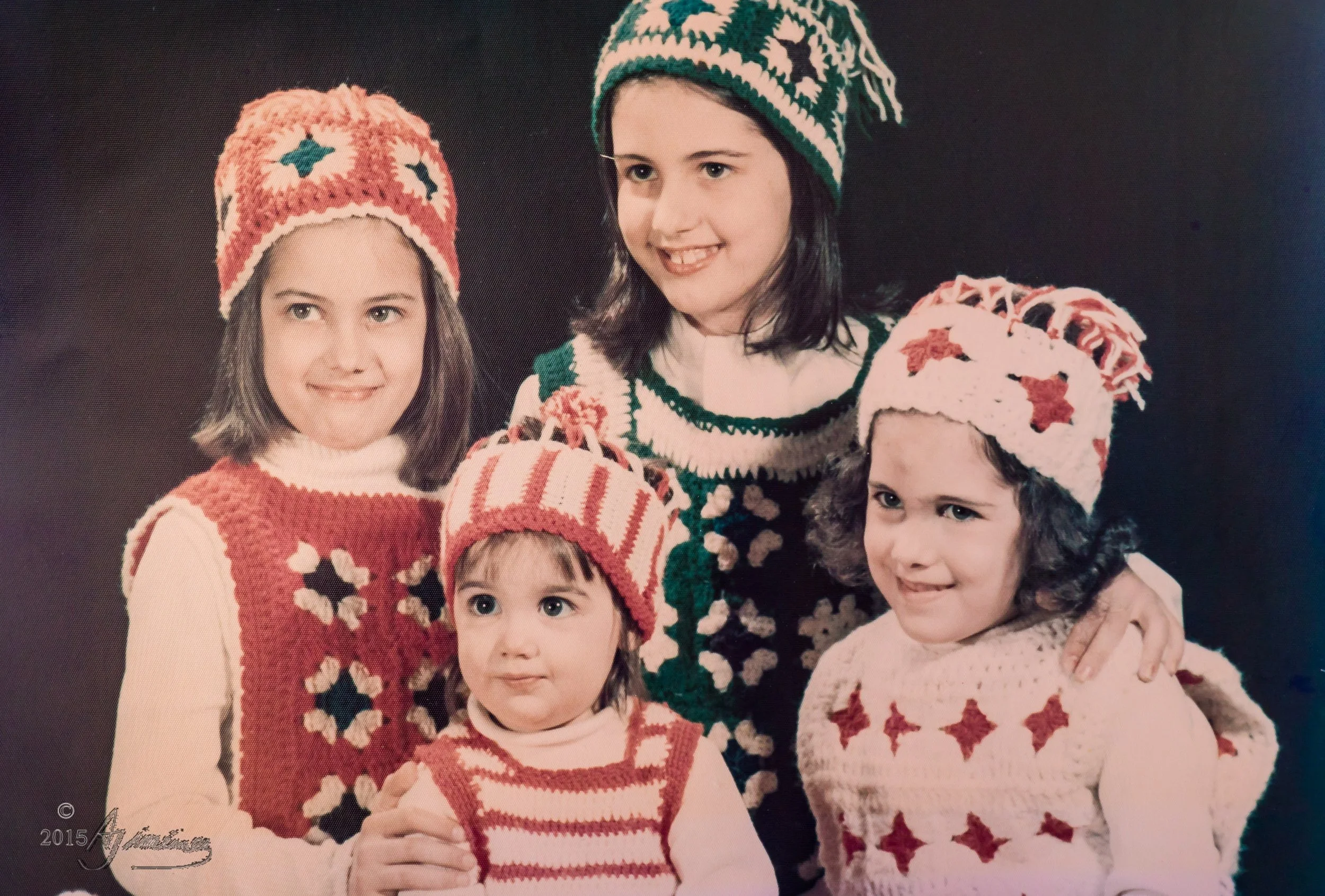
Winter of 1976 Tres (green) Lisa (red) Susie (white) Ani (red/white stripes)
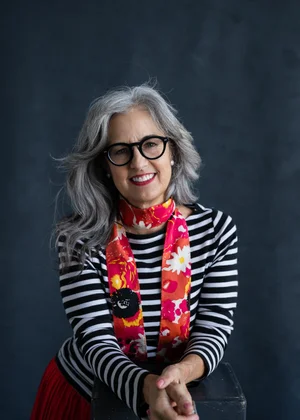
I’ve called myself the ringleader of my 3 younger sisters for as long as I can remember.
I was the firstborn of young parents, aged 20 and 22, who had been married ten months when I arrived. Lisa came a few years later, then Susie, then Ani, all four of us within ten years. I was the inventor of our games and schemes, and my sisters were happy to play along, even when the scheme was a little questionable. I made it sound so fun.
One of my bigger ideas involved sending baby Ani down the laundry chute while Lisa and Susie waited in the room below with a basket of clean laundry to catch her. By any grown-up measure, it was a terrible idea. To us it was an adventure, and it was hilarious fun. They caught Ani succesfully, she was laughing at the joy of it all, and as the ringleader, I was the one who was punished for my leadership brilliance
Sarah Sloat's Atlantic piece, "The Plight of the Eldest Daughter," looks at what people online have named eldest-daughter syndrome: the feeling that the household's happiness rests on you, that you have to keep up an appearance of control, and that nobody cares for you the way you care for everyone else. The researchers she interviewed say the pattern is real, and they trace it to what families and cultures expect of firstborns and of girls, more than to anything we are born with. Corinna Tucker, who studies siblings, sums it up in two lines: "Women are expected to be nurturers. Firstborns are expected to be exemplars."
I recognized the second line more than the first. In my family I was less the nurturer and more the one who came up with the plan and got everyone moving. In Sarah’s research, many firstborns describe themselves as responsible and leadership (aka “ringleaders), and the younger siblings say bossy and overcontrolling. I can see both lists in myself, and I have spent a good part of my adult life learning which one is showing up when.
The exemplar was my father. Alberto Jiménez, who came to the United States from Cuba in April 1961 as an immigrant of the Operation Pedro Pan children. This past August, my family and I toured the Freedom Tower in Miami, which now holds the first permanent exhibit on Operation Pedro Pan. We stood in the building where all of my Cuban family was processed for immigration after fleeing Cuba with nothing more than a suitcase. It was a moving visit for all of us. When my Dad came to the US from Cuba, he became the first in his lineage to go to college, and he built a career as a computer scientist and engineer.
Dad had high standards for hard work, homework, studying, and grades, with a good college as the goal. He would lose it if I brought home a C in anything. Sarah Sloat’s research shows that parents pour the most attention and worry into their firstborn, watching grades, health, and friendships while they try to get it right. Add a father who built a new life in a new country through education, and getting it right with the first one carried even more weight.
I felt that pressure, and I added my own. I wanted to walk in his footsteps, so I started in computer science at UC Berkeley. Two years in, I knew I hated it, and I had to change majors. The same father who would lose it over a C was my biggest supporter when it came time to change course. He asked me, "Why don't you do what you love?" I did, and I graduated with a degree in Fine Art and a minor in Costume Design.
Sloat's article frames the eldest daughter's load as something handed to us, and much of mine was. My father's question taught me something I didn't find in the research: the person who sets the bar can also be the one who invites you to set your own.
The article closes with hope that families will renegotiate what she calls daughtering, with room for what eldest daughters want for themselves. At this time in my life, I’m working on balance and presence. The ringleader in me can tip into bossy. My adult work is to be patient and collaborative, to support my loved ones, and once in a while to let them take the lead. That last part takes practice, and I am practicing.