Rollerskates, a Kitchen Table and an Idea That Changes Everything
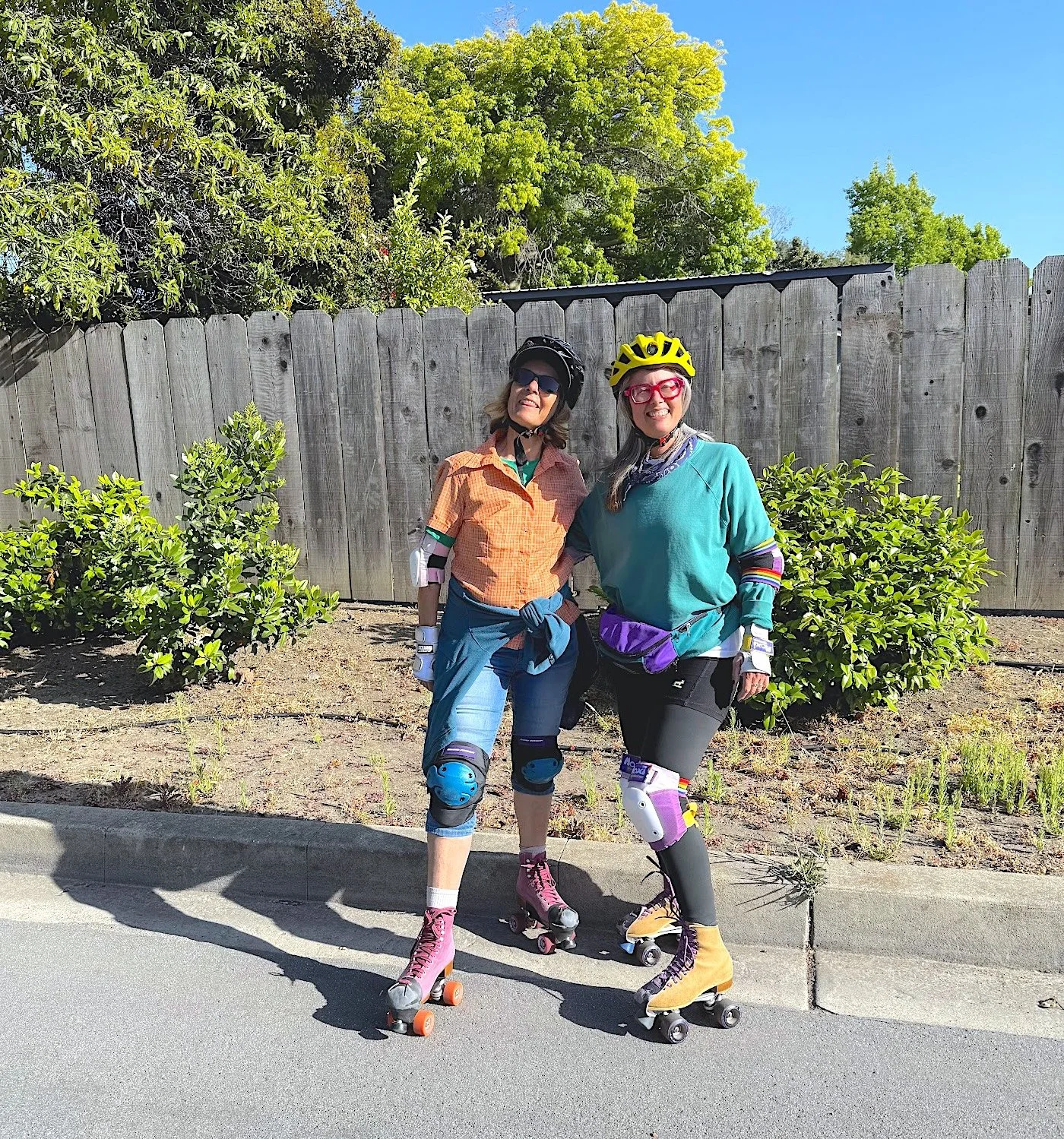
Susa and Lisa rollerskating together on Lincoln Street in San Luis Obispo
Last June, my sister Lisa, her friend Susa and I rolled along down that long, quiet, gently sloping street near my mom’s house in San Luis Obispo — the kind of street that feels made for exactly this kind of unhurried joy. Afterward, still flushed and laughing, we ended up in my mom’s kitchen. That’s where I met Susa’s husband Gus Hagelberg, who splits his time with Susa between SLO and Germany, and who — in the casual way that only kitchen conversations allow — introduced me to something that felt immediately like a calling.
The Economy for the Common Good (ECOnGOOD).
I didn’t know my role in it yet. I still don’t, fully. But that’s exactly what a calling feels like — you recognize it before you understand it.
Gus presented the foundational summary of Christian Felber’s framework, and as he talked I felt that particular kind of excitement that arrives when someone names something you’ve been circling without language. ECOnGOOD is a global movement proposing that economies be measured not by profit and GDP, but by human dignity, solidarity, ecological sustainability, social justice, and democratic participation. Felber’s book — currently titled Change Everything with a new edition arriving in October as Economy for the Common Good — lays out a practical blueprint. Not a utopian fantasy, but a working alternative with thousands of companies, municipalities, and universities already piloting it across Europe and beyond.
I am a futurist in the way most facilitators naturally are. I watch systems. I watch people inside systems. And what I see right now is a Tower moment — that tarot image of a structure built on a false foundation finally, inevitably, coming down. Government, financial systems, business models, social contracts — so many structures we inherited were designed for a world that no longer exists, by and for people who don’t represent most of us. They don’t suit who we’ve become or what we now know about how humans actually thrive.
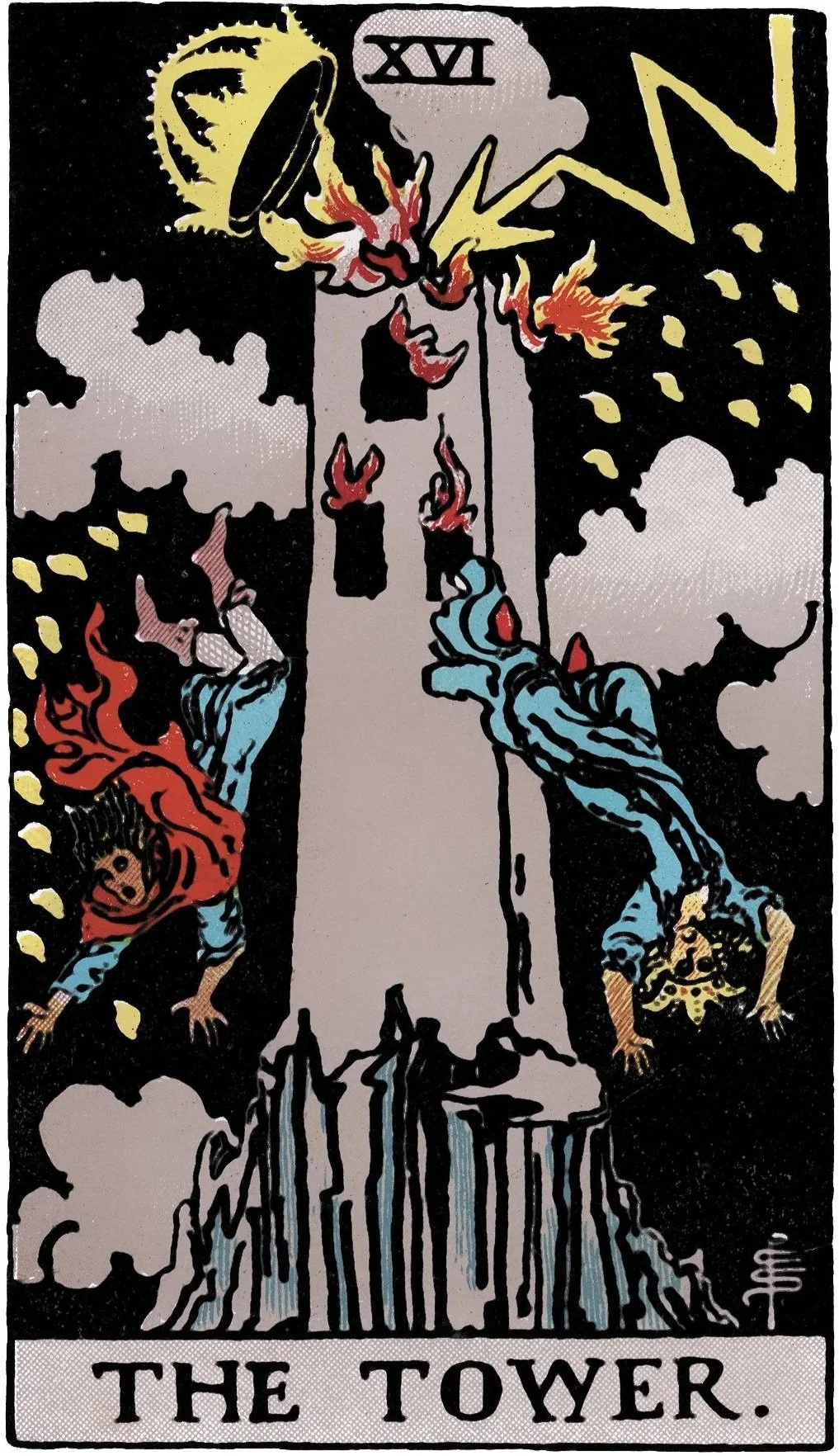
“what I see right now is a Tower moment — that tarot image of a structure built on a false foundation finally, inevitably, coming down…
…so many structures we inherited were designed for a world that no longer exists, by and for people who don’t represent most of us. “
I’m drawn to matriarchal and more equitable models of working together. Books like Profit at the Bottom of the Ladder show that putting workers first isn’t soft idealism — it’s good business and good humanity. I believe in a generation ready and hungry for something different. And I believe the reboot, when it comes, will need frameworks waiting in the wings. Practical, tested, values-rooted alternatives that people can actually build with.
ECOnGOOD is one of those frameworks. Not the only one, but a serious one. It puts cooperation and community in the foreground, with human dignity, solidarity, and democratic participation as core values — a direct inversion of the systems currently doing the most damage.
I want to keep learning about it. I want to share it. I want to be a ripple in the pond of change — not the whole wave, just a persistent, widening circle.
So thank you, Gus. Thank you, Susa. Thank you, Lisa, for the skates and the street and the kitchen conversation that quietly shifted something in me.
To learn more: econgood.org
Felber’s book: Economy for the Common Good (new edition October 2026) — available anywhere books are sold.