What Stillness Taught Me About Listening
What Stillness Taught Me About Listening A rollerskating injury, five months of recovery, and how I found my way to tarot
My tarot practice began with a torn hamstring.
I was rollerskating — attempting a move that had other ideas — and ended up with all three left hamstring muscles and tendons detached from the pelvis. Surgery a month later. Then five months of genuine stillness, the kind your body enforces when you have no other choice.
I didn't plan to become a tarot practitioner during that recovery. I planned to rest and heal and get back to my life. But stillness has its own agenda.
In those quiet mornings, unable to move through the world the way I normally did, I started moving inward instead. I pulled cards every morning. Not to predict anything. Not because I had it figured out. Because I needed a practice that met me where I was — horizontal, humbled, and suddenly with more time than I'd had in years to actually listen to myself.
Over those five months I developed a fluency I couldn't have rushed. I learned the images. I learned the metaphors. I learned to trust my first response before my analytical mind could override it. Julia Cameron calls this kind of daily creative practice the Artist's Way — a morning ritual that clears the channel and lets what's true come through. That's what the cards became for me. A channel. A daily act of inner listening.
When I healed and returned to my work as a coach and facilitator, I brought the practice with me. Not as a party trick. Not as a mystical add-on. As a genuine tool for the kind of self-awareness that changes how people lead, relate, and make decisions.
And somewhere along the way, people started asking me to read for them and teach them about tarot.
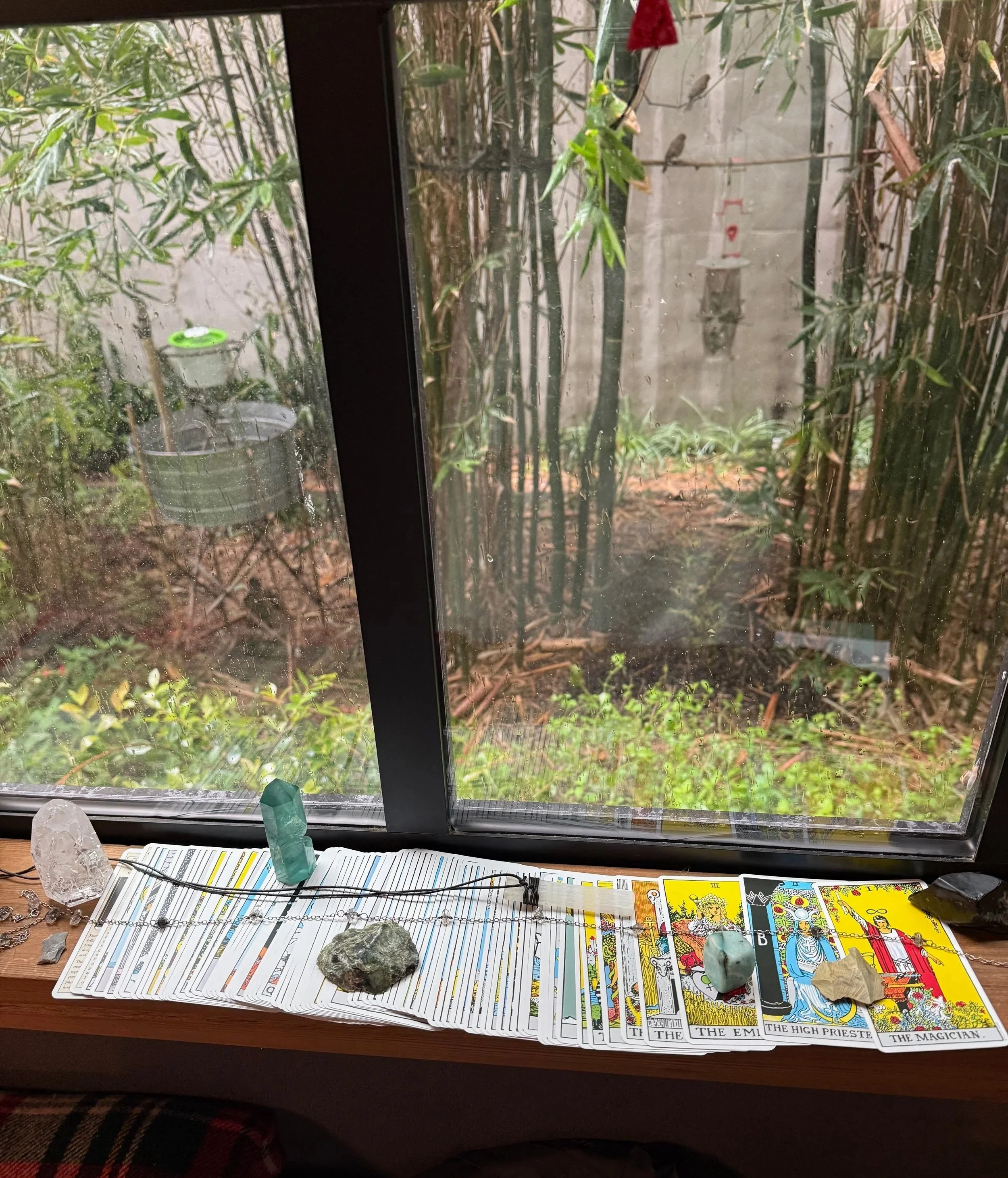
How I Welcome a New Deck
When a new deck arrives, I don't just open the box and start shuffling.
Each deck becomes its own relationship, and like any relationship worth having, the welcome deserves to be special.
How I Welcome a New Deck
When a new deck arrives, I don't just open the box and start shuffling. Each deck becomes its own relationship, and like any relationship worth having, the welcome deserves to be special.
The windowsill in the photo above was built by my partner Jack from a repurposed giant redwood wine fermenting tank — one of those small acts of love that becomes part of a practice without either of you planning it that way. That's where new cards go first. Rain streaks the glass, sunlight moves across the deck through the day, and moonlight finds it at night. Three days of just resting there, held between inside and outside, between my world and whatever the cards carry with them.
I place crystals nearby — clear quartz for clarity, green fluorite for intuition, raw stone for grounding. A necklace I wear often rests with the deck, so the cards begin to carry a trace of familiar energy before I ever ask them anything. These aren't requirements. They're my way of marking the beginning with intention. Saying: this matters, and I'm paying attention.
After three days, I take the deck in my hands and shuffle — long and slow, no question yet. Just breath and movement and the sound of cards finding their new order. I'm not reading. I'm introducing my hands to the deck and the deck to my hands.
Then I pull one card and ask a single question: what do you want me to know?
Whatever comes up, I sit with it before I look anything up. I write what I see in the image, what lands in my body, what word surfaces before I have time to think. That first card becomes a kind of handshake — the deck showing me something about itself, or about what I'm already carrying, or both.
This practice — unhurried, sensory, honest — is the foundation of everything I've come to understand about tarot. It isn't fortune telling. It isn't mystical gatekeeping. It's a structured way to access what you already sense but haven't yet said out loud.
I've been sitting with these cards every morning for years now. What started as recovery medicine became a discipline, and what became a discipline is now becoming something I'm ready to share. This spring I'm stepping into new territory — bringing tarot into workshop spaces for the first time, starting with an intimate gathering I've been invited to facilitate at an annual women’s retreat in Napa later next month. And I've just launched a new home for all of it: www.tuningintotarot.com
It's new ground. Moving something from personal practice into professional offering requires the same thing the cards always require: a willingness to show up before you feel completely ready, and trust what you already know.
That's all any of us are ever doing, really. Tuning in.

Tres Jiménez is a coach, facilitator, and Enneagram practitioner based in the San Francisco Bay Area. She works with individuals and groups. Her tarot practice and workshops live at tuningintotarot.com and on Instagram at @tres_mystic.