Circles & Connections
Neurographic Doodling awakened my Right Brain to Take the Lead
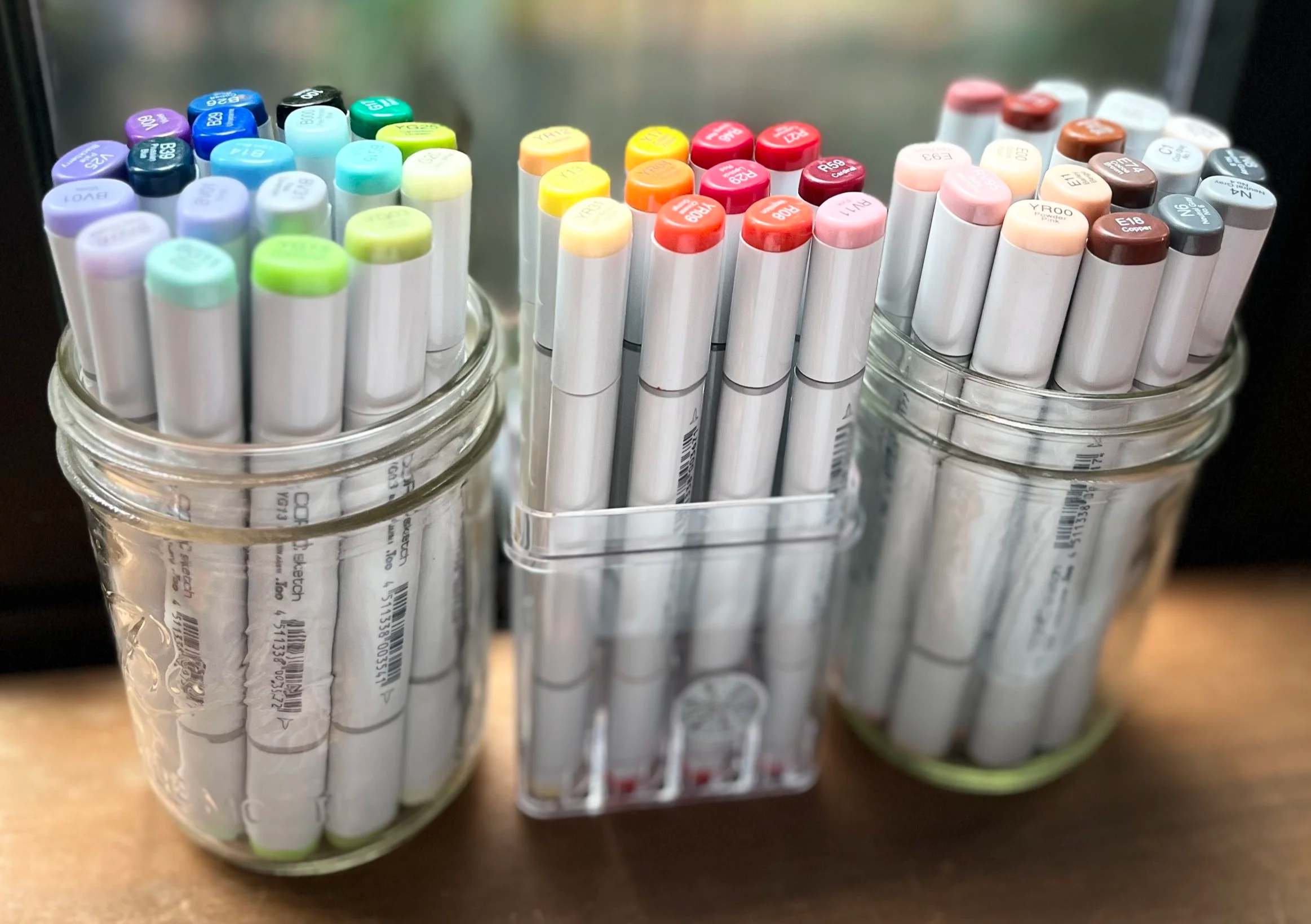
The pre-work for the workshop I’d been invited to arrived in my inbox a few days before:
Come prepared with blank sheets of paper and markers. That's it. No reading, no reflection prompts, no slides to review. Just paper and something to write with.
I knew immediately that I was going to like this.
The workshop was hosted by my colleague Kathryn Matz of Hands On Leadership, and led by Chris Murchison — visual artist, experience designer, and arts facilitator whose work lives at the intersection of creative practice and meaningful change. Chris ran a similar session with Kathryn and her board of advisors, and she found it so valuable she wanted to offer it to her broader community of coaches and facilitators. I walked in with markers, open hands, and no idea how much was about to click into place.
The Circles We Live In
Earlier that week, I attended a workshop led by Arielle Fuller — professional connection and dating coach, about friendship and the art of building and deepening our connections.
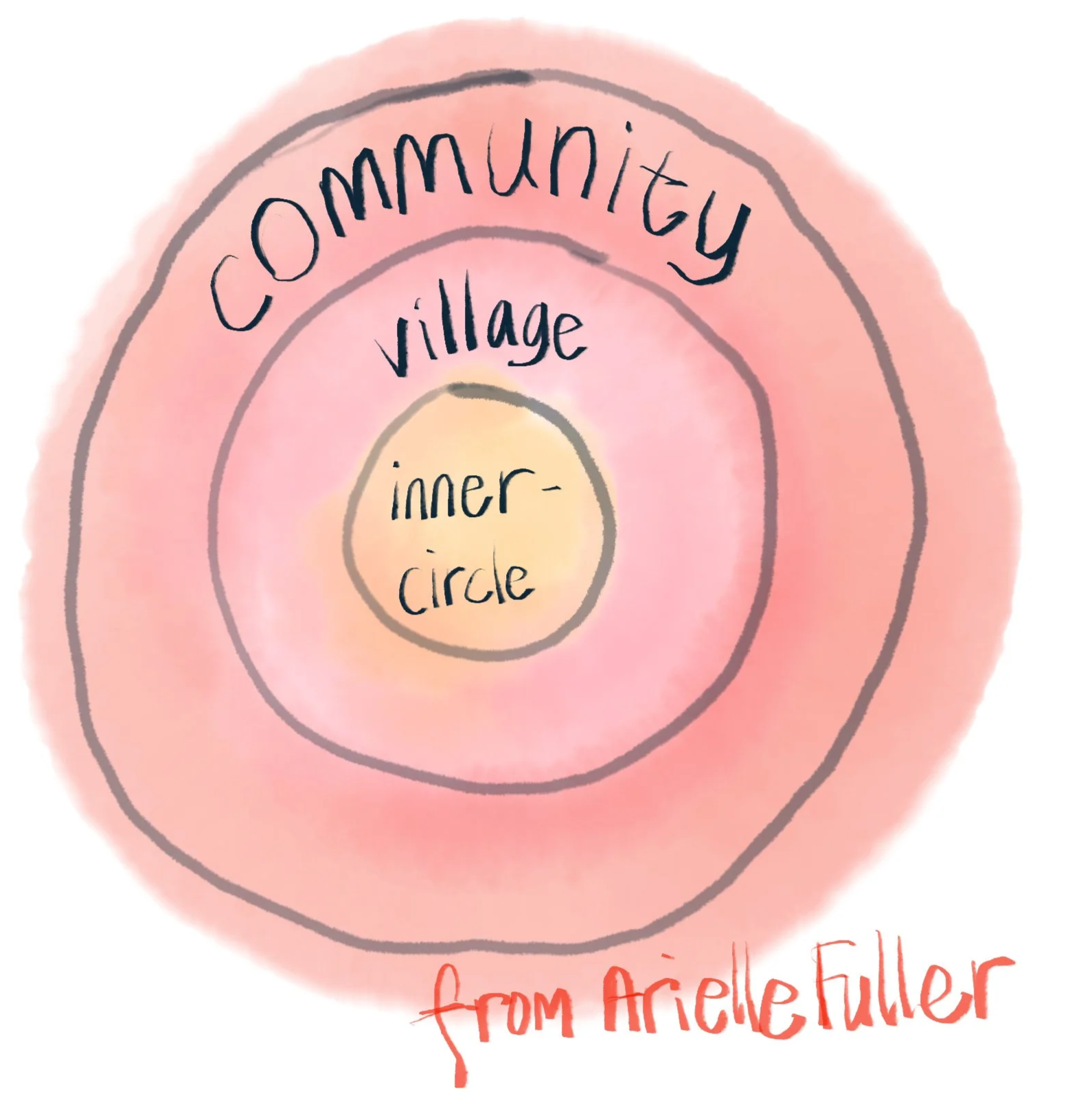
Arielle talked about our circles of connection in three concentric rings:
The innermost circle of your closest few
The middle ring of your village
The outermost ring of your broader community.
The exercise was both simple and quietly revelatory — mapping who actually lives in each of those rings, and where you've been putting your energy. For me, this landed with particular weight. I'm an extrovert by every measure, but two years ago you wouldn't have known it. A long recovery from surgery, compounded by the still-reverberating effects of COVID isolation, had quietly shrunk my world. My circles had contracted. And at some point, without fully noticing, I had stopped reaching outward.
Coming out of that period, I've felt a strong pull — almost like a biological directive — toward reconnection. Not just with people I already know and love, but with people who share my values and are asking the same kinds of questions I am. I've been drawn back to networking, to community, to new acquaintances who feel strangely familiar because of what they care about.
This impulse has a name in the research. In January 2025, outgoing U.S. Surgeon General Dr. Vivek H. Murthy released his Parting Prescription for America. His diagnosis, after six years as the nation's doctor and conversations with thousands of Americans: community has eroded, and the consequences are serious. His prescription was direct: choose connection over comparison, choose love over fear, choose relationships, service, and purpose as the building blocks of a fulfilled life. He named the antidote to loneliness not as therapy or technology, but as community — the kind that sees you and lets you be yourself.
His words confirmed something I'd already been feeling in my body. We are wired for each other. And when we lose that, something essential goes dim. (You can Dr. Murthy’s full message here)
From Chain Links to Chainmail
When I started thinking about reconnection, the first image that came to me was a chain — individual links coming together to create something stronger than any single piece. It's a fine metaphor. Solid. Clear.
But as I kept thinking, the image evolved. A chain is linear. It has endpoints. It can be broken at a single link. What I was feeling was something more multi-dimensional than that.
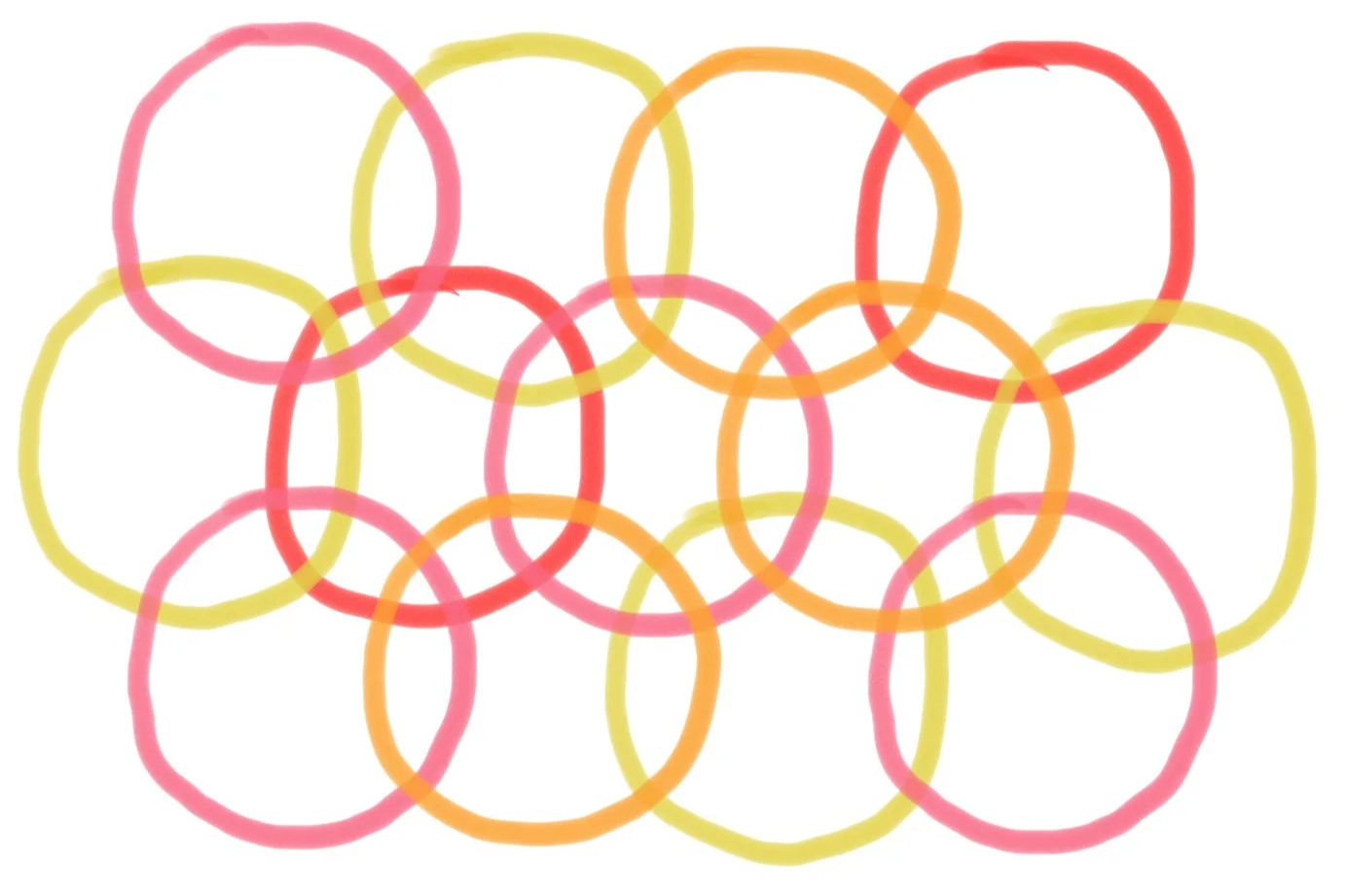
What I kept seeing in my mind was chainmail
— that ancient, interlocking mesh of small rings that knights wore as armor. Flexible and incredibly strong. No single point of failure. Every circle connected to multiple others. The more connections, the more resilient the whole structure becomes.
That's what healthy community feels like to me, a strong web of interconnected circles. Not just a network, but an integrated ecosystem. Each of us brings our own circles that touch and overlap with others in ways that link and supports us collectively — through complexity, through pressure, through change.
And I've started to feel, with a kind of quiet urgency, that strengthening my own circles isn't just personal. It's also how I participate in shifting the values and energy of the broader world. Dr. Murthy's research bears this out: connection doesn't just feel good, it is good — measurably, medically, profoundly good.
The Room That Knew Me
When I joined Chris's online workshop, I looked around the gallery view of familiar faces, I felt that warm, specific pleasure of seeing people you love to work and be with all in the same room — even a virtual one.
There were longtime colleagues in the virtual room. People I'd collaborated with on projects over the years. Friends connected through shared values and shared work. Several people I was multiply connected to — meaning I knew them from more than one context, which always feels like a small miracle.
I shared the chainmail metaphor with the group, because it matched exactly what I was looking at. The room itself was a demonstration of the idea.
Chris told us he'd just returned from completing a degree in Art Therapy in Barcelona. (My nephew is about to move to Barcelona for graduate school. I felt the synchronicity like a small electric current.) It was the first of many moments that day where I had light-bulb moments.
Art Has Always Been There
I need to share something about my relationship with creativity before I tell you what happened next, because the backdrop matters.
Art has always been present in my life — drawing, painting, making and building things at home, at school and in my community. I was also involved in theater and music from the first grade through today as a theater performer, costume designer, and set builder, and minored in costume design at UC Berkeley. As an adult, I’ve spent 20 years creating large scale art with my husband Jack for the Burning Man festival.
But creativity was always the supporting cast, never the lead. The culture was clear that art and creativity were ok as a hobby but not as a profession. I graduated into the fashion industry at a moment when Michael Douglas in Wall Street was making the argument that greed was not just acceptable but good, and this message has only gotten stronger today. Wealth, power, fame. I got caught up in it, as many of us did. I worked hard, got promoted young, adopted a driven, pushing ambition that looked like success for about twenty-five years — until the moment I realized: this is not who I am. I made a career shift to become a coach and facilitator. I now use creativity to co-create training, retreats, and workshops with my clients and help them thrive.
What Neurographic Doodling Actually Is
Here is the part where I explain what happened in the workshop — but first, a brief explanation of the practice itself, because it deserves more than the word "doodling" implies. My cousin Sari introduced neuro-doodling to me a few years ago and I loved it. This reintroduction to Neurographic doodling by Chris set me up to drop right in.
Neurographic art was created in 2014 by Russian psychologist Pavel Piskarev, PhD — a specialist in Gestalt coaching, architectural design, and psychological sciences. He coined the term neurographica by combining neuro (the nervous system) with graphica (drawing). His premise: spontaneous, flowing lines, intentionally drawn, can help visually reprogram neural pathways and access a calmer, more integrated state of mind.
How to Neurographically Doodle:
1. Name a challenge, worry, or question you're holding.
2. Draw a spontaneous, continuous line (or several) across the page — fast, intuitive, without lifting the pen — while holding that challenge in mind.
3. Wherever lines intersect, fill in and smooth out the corners. This is the key gesture: softening points of tension into connection.
4. Add shapes, color, and additional lines to fill the space — following the flow of your natural intuition rather than intention or what you think you should or should not do.
The neuroscience behind this is grounded in the concept of neuroplasticity — the brain's capacity to rewire itself. Drawing non-repetitive, flowing lines activates new neural pathways. The rounding of sharp intersections sends a signal to the nervous system that tension can be resolved. Researchers describe the effect as similar to a flow state: the inner chatter quiets, and a more integrated perspective emerges.
Unlike random doodling (which is pleasurable but purposeless) or Zentangle (which is structured and pattern-based), neurographic art begins with intention — a specific question or challenge — and moves toward resolution through the act of drawing itself. It's not art therapy exactly. Piskarev called it visual neurohacking. What happend for me was that the right brain took the wheel.
If you want to try it, this tutorial that my cousin Sari shared with me years ago is a clear and grounded starting point.
What Came Up for Me
Chris asked us to write down a challenge we were sitting with. I wrote: “finding easeful ways of achieving financial means of support in my life.”
Then we doodled — something unexpected happened to me.
For no reason I can explain analytically, every single line I drew started from the right side of the page. My hand kept going there first, then arcing across. When it came time to round the intersections — to soften the sharp points where lines crossed — I again started from the right side and worked my way across.
I didn't decide this. It just happened.
When Chris asked us to reflect on the experience, he offered five questions. My answers came fast and with a clarity that surprised me:
What was the experience of doing this activity? I felt the freedom to let go — to be guided by my pen, not my plans.
What did I notice? My right brain took over. The creative, intuitive side of me led without asking permission.
How did I feel afterward? Alive. Energized. Amazed by what I was sensing rather than seeing.
How had I felt about my challenge before drawing? Worried. Afraid. Carrying a low hum of shame and a strong desire to look away from scarcity.
What did I discover? That I am called to creativity. That creativity is what I want to lead with — in my work, in my life, in how I generate and receive support. Everything started on the right. My right brain was not suggesting. It was claiming.
I looked down at my hand. There was a stain of blue fountain pen ink on my fingers. I sat with those happy stains before scrubbing them away.
Even the ink is a sign, I thought. I am marked by this. I am an artist. This is my way.
Claiming Creativity as My Power
I am someone who spent decades in the creative fields — fashion, product development, theater, design — while simultaneously not quite claiming the word artist as my own. It's a quiet form of self-erasure that I suspect is familiar to a lot of people, especially women who loved making things and were gently redirected toward something more practical.
Our culture has been having this conversation with people since kindergarten. You're in the art room, you're making something that feels like pure joy, and then someone — a teacher, a parent, a friend — says something that lands like a small but permanent verdict. That's not very good. That doesn't look like anything. You can't make a living that way.
For most of us, that's when we stop. Sometimes all at once, and sometimes gradually. We file art under hobby, under guilty pleasure, under not serious. The right brain gets quieter and quieter until we forget it was ever that loud.
What I am moving toward — and what this day confirmed with a kind of full-body certainty — is leading with creativity as the core of my professional identity. Not as a nice addition to my coaching and facilitation practice, but as the spine of it. The artist and the coach are not two separate people. They are the same person, and it's time she showed up whole.
The Cortisol Boost and the Spiral Up
There's a phrase I wrote on my doodle: cortisol boost. It's sitting right there in the image, in small green letters, next to a cluster of connections.
I wrote it because I knew, as I was drawing, that I was experiencing something physiological. Not just emotionally elevated — actually different in my nervous system. The research supports this: creative flow states reduce cortisol (the stress hormone) and increase dopamine. The act of making something with your hands, especially with no outcome requirement, sends the body a message that it is safe. That there is enough. That it can rest into the present.
The challenge I named at the start was about financial ease. And what the doodle gave me was not a financial plan. It gave me a felt sense that my creativity is the path — not the obstacle, not the detour, not the thing I have to do on weekends. The path.
Spiral up, I wrote. And I meant it.
The Chainmail Holds
By the end of the session, I had a doodle in front of me that I'm honestly still processing. I had a page full of green and blue lines and rounded intersections and words that surprised me. I had blue ink on my hand. And I had the felt sense of something settling into place.
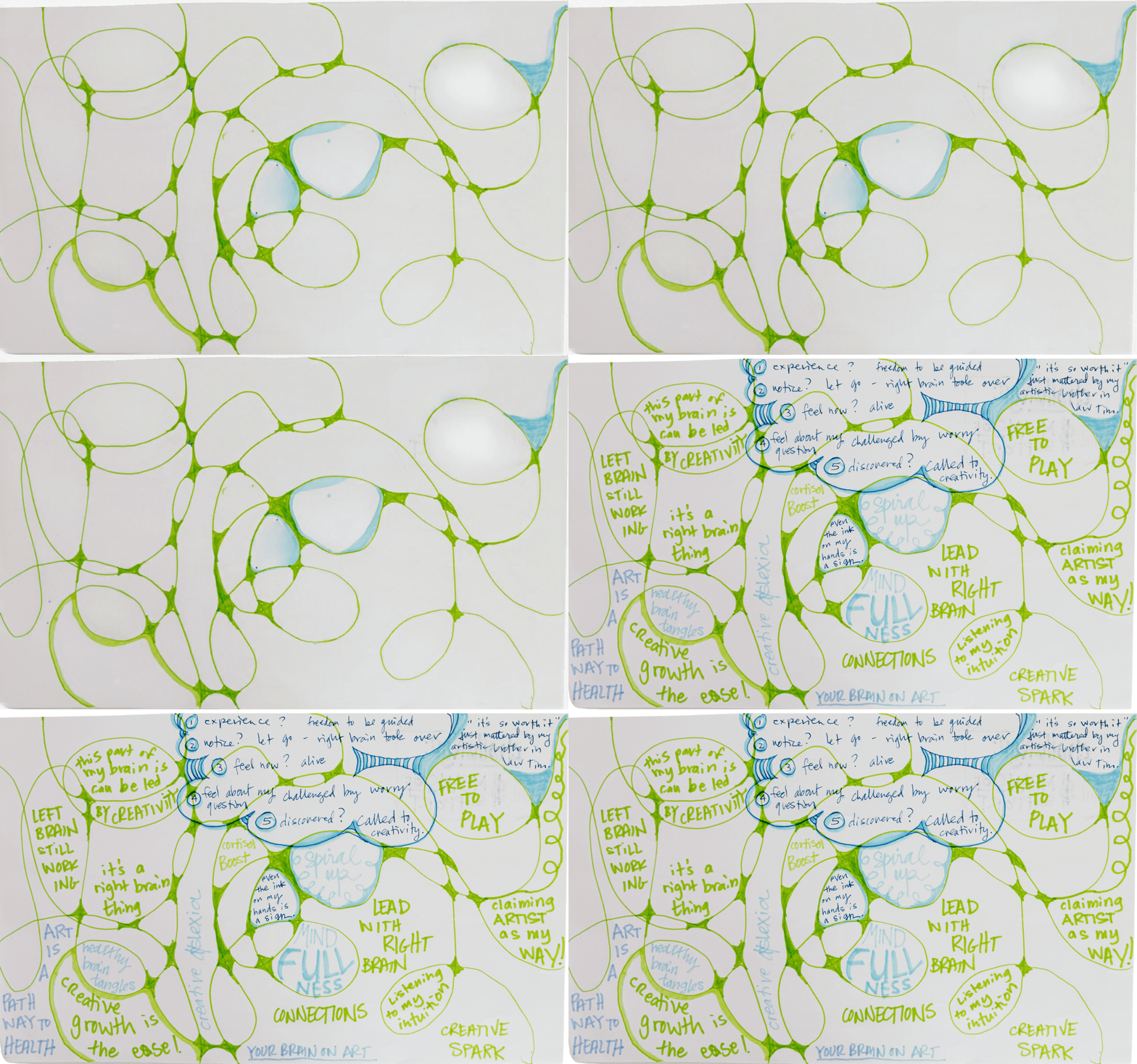
What settled was this:
The circles in my life — personal, professional, creative, spiritual — are not separate. They are a mesh. They hold each other. When one part of my circle strengthens, the whole structure becomes more resilient. When I make a new connection with someone who shares my values, I am adding a ring to a chainmail that holds all of us.
This is what Arielle Fuller's workshop invited us to map. This is what Chris Murchison created space for with blank paper and markers and five beautiful questions. And this is what my right brain, leading from the right side of the page, already knew.
The left brain is still working, as my doodle notes. It is still there, steady and useful, keeping the trains running. But it can be led by creativity. It can follow the right brain's call. It doesn't have to drive every vehicle.
I am claiming art and creativity as my way.
I am strengthening my circles.
And I am feeling the spiral go up.
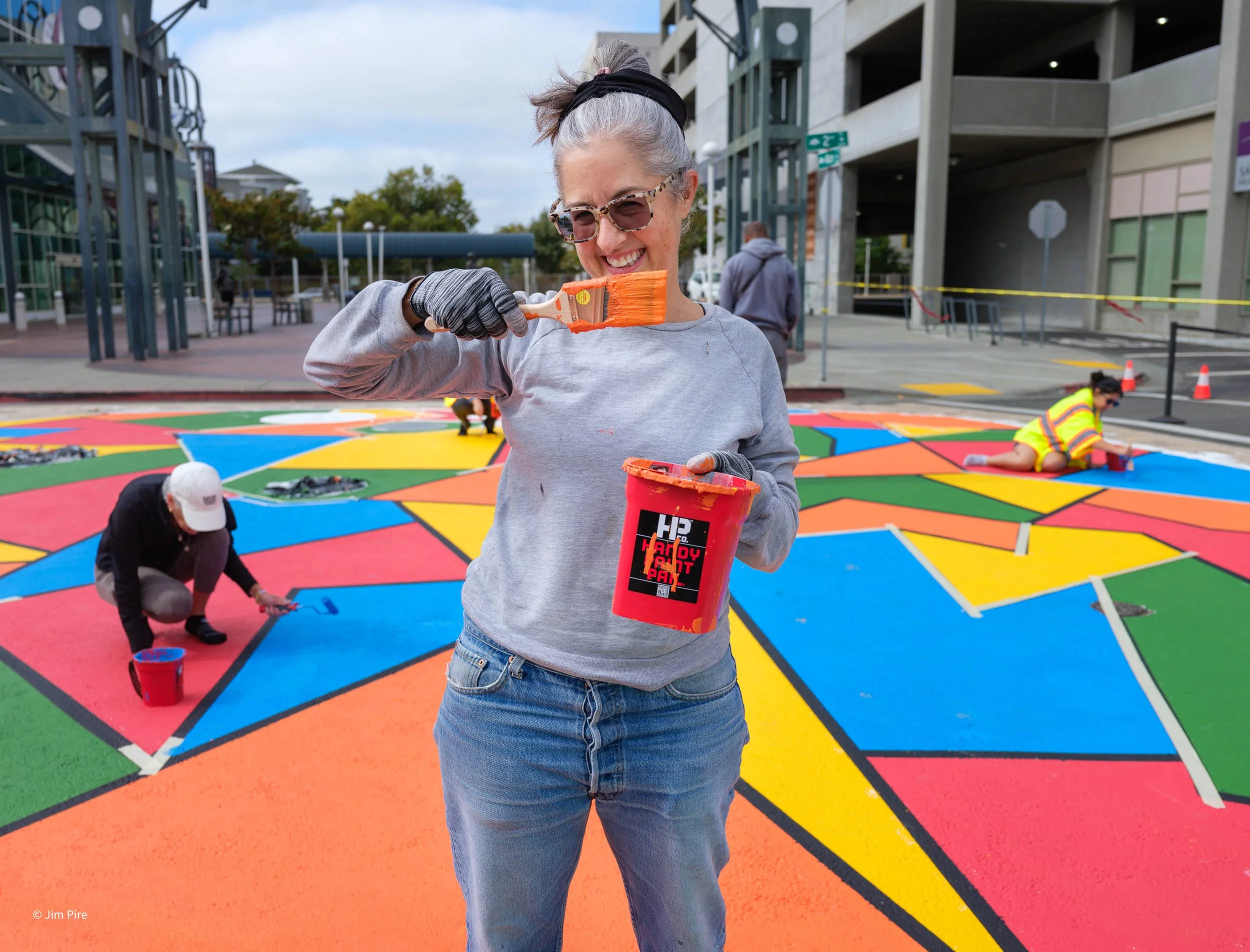
Helping to fill in a giant “doodle” in my neighborhood that celebrates the logo of our local soccer team the Oakland Roots.
Resources and References
Vivek H. Murthy, My Parting Prescription for America (January 2025) — Full text can be downloaded here
Pavel Piskarev's Neurographica method — Give it a try by using this great online resource that Sari shared with me years ago.
Tres Jiménez coaches, facilitates, and consults at the intersection of creativity, leadership, and human connection.